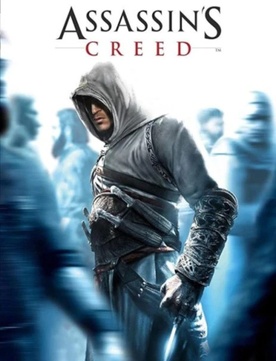
Before the first stone of civilization was laid, a war had already begun—not over land or gold, but over the very nature of human choice. This is the story of Assassin's Creed, a saga that stretches from the age of gods to the age of empires, from the sun-baked markets of Baghdad to the mist-covered streets of Victorian London. It is a single, unbroken narrative about two secret factions locked in an eternal struggle: those who believe humanity must be free to choose its own destiny, and those who believe peace can only be achieved through absolute control. What follows is the complete shape of that story, told as history rather than as a game.
The Architects of History: The Isu and the Pieces of Eden
Long before humans, Earth belonged to an advanced species remembered only as the Isu—beings whose mastery of science was so profound that later ages would mistake them for gods. The Isu engineered humanity as a servant race, a docile workforce kept obedient through artifacts of immense power called Pieces of Eden. The most feared of these was the Apple of Eden, a device capable of projecting illusions and bending the minds of entire crowds to a single will. (Assassin's Creed II, Assassin's Creed: Brotherhood)
The first fracture in this order came when two human-Isu hybrids, Adam and Eve, stole an Apple and led a rebellion against their masters. A decade of war followed, but it was cut short not by victory, but by catastrophe: a massive solar flare that nearly annihilated both species and shattered the world. The Isu were obliterated, and humanity inherited the ruins. Yet not all of the Isu vanished cleanly. Some, like the scientist Minerva, left behind messages meant for minds thousands of years in the future. Others, like the cunning Juno, sought to turn the coming disaster into a permanent cage for humanity. Their unfinished conflict became the hidden foundation upon which all human history would be built. (Assassin's Creed II, Assassin's Creed III)
The Eternal War: Assassins and Templars
From the ashes of the Isu, two philosophies hardened into institutions. The Templar Order holds that humanity is incapable of governing itself without descending into chaos. Peace, in their view, can only be achieved through control—control of information, of belief, and ultimately of the mind, often through the recovered power of the Pieces of Eden. The Assassin Brotherhood exists to oppose them. Its creed—“Nothing is true; everything is permitted”—is not a celebration of lawlessness, but a warning: all authority must be questioned, and no person may surrender their autonomy to another, no matter how benevolent the ruler claims to be. Their war is fought not on open battlefields, but in the backrooms of power, the whispers of conspiracy, and the quiet work of a single hidden blade. (Assassin's Creed, Assassin's Creed II)
The Modern Anchor: Memory, Blood, and the Animus
The historical stories of this saga are not told for their own sake. They are recovered through a miraculous technology called the Animus, a device that reads the genetic memories encoded in a person’s blood, allowing them to relive the lives of their ancestors as vivid, waking dreams. This is how the modern factions—the Templars through their corporate front Abstergo Industries, and the Assassins through their scattered cells—search the past for Pieces of Eden and for the secrets of the Isu. The first modern protagonist, Desmond Miles, is a bartender kidnapped by Abstergo and forced to relive the lives of his ancestors. His journey from prisoner to leader ends in 2012, when he sacrifices his life to activate a global shield and prevent the solar flare that the Isu had foreseen. After Desmond, the modern thread passes to Layla Hassan, a researcher who defects to the Assassins and eventually sacrifices herself to stabilize the world’s magnetic field from within a digital realm called the Grey. In a final turn, the modern story is taken up by Basim Ibn Ishaq, a figure from the Viking Age who is revealed to be the reincarnation of the Isu trickster Loki—an ancient soul playing a very long game in a new world. (Assassin's Creed, Assassin's Creed III, Assassin's Creed Origins, Assassin's Creed Valhalla)
The Historical Tapestry: Key Eras of the Hidden War
Ancient Greece: The Cult of Kosmos (5th Century BCE)
The earliest chapter in the organized war belongs to Assassin's Creed Odyssey. During the Peloponnesian War between Athens and Sparta, a mercenary named Kassandra (or her brother Alexios, depending on the path taken) discovers a shadowy organization called the Cult of Kosmos, which has been secretly orchestrating the conflict for its own ends. Among the Cult’s weapons is Kassandra’s own long-lost sibling, taken as a child and shaped into a living instrument of war. Kassandra dismantles the Cult and destroys an Isu device capable of calculating probable futures, a machine that had allowed the Cult to steer the war like a hidden hand. She also inherits the Staff of Hermes, an Isu artifact of immortality, and becomes the eternal guardian of Atlantis—a role that will keep her alive across millennia, a quiet witness to the war she can never fully leave behind. (Assassin's Creed Odyssey)
Ptolemaic Egypt: The Birth of the Hidden Ones (1st Century BCE)
The Brotherhood as a named, organized body begins in Assassin's Creed Origins. In Egypt under Cleopatra, a Medjay—a protector of the people—named Bayek and his wife Aya lose their son to a cabal of masked men called the Order of the Ancients. Their grief becomes a campaign of vengeance, and that vengeance becomes something larger: a secret order dedicated to opposing tyranny from the shadows. They call themselves the Hidden Ones. The Order of the Ancients, the same force that would later harden into the Templar Order, is not a local villain but a network reaching into Rome itself, with both Cleopatra and Julius Caesar entangled in its designs. Bayek and Aya plant the first seed of the Brotherhood in blood and loss. (Assassin's Creed Origins)
Baghdad: The Making of a Hidden One (9th Century)
Assassin's Creed Mirage returns to the youth of Basim Ibn Ishaq, the figure who will later become central to the modern story. In ninth-century Baghdad, Basim is a street thief plagued by visions he cannot explain. He joins the Hidden Ones and hunts members of the Order of the Ancients, but his true journey is inward: he discovers that his nightmares are memories of another life, the life of Loki, an Isu who was imprisoned and tortured by Odin in the age of the gods. Basim does not merely join the Brotherhood; he remembers that he is older than it, and his allegiance to any human order becomes conditional. (Assassin's Creed Mirage)
The Viking Age: Gods Reborn in Human Skin (9th Century)
In Assassin's Creed Valhalla, the Viking warrior Eivor leads a clan from Norway to England, but the story beneath the story is the return of the Isu. Eivor is a Sage—a human born with the soul of the Isu Odin sleeping inside them. Eivor’s adopted brother Sigurd carries the soul of Tyr, and their companion Basim is the waking Loki. The ancient feud between Odin and Loki, the imprisonment and the betrayal, is replayed in the ninth century through these reborn souls, even as Eivor builds a new life in England. By the end, Basim is freed from the Grey and steps into the modern world, while Eivor chooses to deny Odin’s will and remain her own person. The Isu did not die; they were reborn, and their oldest grudges have simply changed costumes. (Assassin's Creed Valhalla)
The Third Crusade: The Eagle of the Holy Land (12th Century)
The first chapter of the franchise proper, Assassin's Creed, follows Altaïr Ibn-La’Ahad, an Assassin in the Holy Land during the Third Crusade. Tasked with killing nine Templar leaders, Altaïr discovers that his own mentor, Al Mualim, has been corrupted by an Apple of Eden and intends to use its power to control the region himself. Altaïr kills the man who raised him and begins to reform the Brotherhood, transforming it from a secretive sect into a force for enlightenment rather than simple political murder. It is the first clear portrait of the Brotherhood’s central danger: the temptation to become the very thing it fights. (Assassin's Creed)
The Italian Renaissance: The Auditore Tragedy (15th–16th Century)
The most celebrated human story belongs to Ezio Auditore da Firenze, introduced in Assassin's Creed II. Ezio is a young Florentine noble whose father and brothers are executed by the Templars through the machinations of the Borgia family. His revenge carries him from the rooftops of Florence to the Vatican, where he confronts the corrupt Pope Alexander VI (Rodrigo Borgia) and, through a Piece of Eden, receives a message from Minerva intended not for him, but for Desmond, thousands of years later. In Brotherhood, Ezio brings the fight to Rome and builds the Brotherhood into a functioning network. In Revelations, he travels to Constantinople in search of Altaïr’s hidden library and finally understands that his own life has been a message passed across centuries. The Ezio trilogy is the emotional heart of the franchise: a story about grief, discipline, and the slow realization that freedom is a burden carried for others. (Assassin's Creed II, Assassin's Creed: Brotherhood, Assassin's Creed: Revelations)
Colonial America and the Age of Sail: Empires, Pirates, and Betrayal (18th Century)
Assassin's Creed III closes Desmond’s modern story while telling the tragedy of Connor, a half-Mohawk Assassin fighting for his people’s survival during the American Revolution. Connor’s struggle reveals that the Assassin–Templar war is not a simple contest of good against evil; both sides can claim noble ends while causing enormous suffering. In Assassin's Creed IV: Black Flag, the pirate Edward Kenway stumbles into the war and learns that freedom without purpose is merely another kind of emptiness. Assassin's Creed Freedom Cry follows Edward’s first mate Adéwalé as he turns his skills against the slave trade. Assassin's Creed Rogue flips the perspective entirely: Shay Cormac, an Assassin who loses faith in the Brotherhood after a mission causes a catastrophic earthquake in Lisbon, defects to the Templars and becomes the most feared hunter of his former brothers. Shay’s story is the franchise’s sharpest argument that the Assassins are not automatically righteous, and that absolute freedom, pursued without wisdom, can be as destructive as absolute control. Assassin's Creed Liberation adds the story of Aveline de Grandpré in Louisiana, a woman who moves between identities to fight for those trapped by slavery and colonial power. (Assassin's Creed III, Assassin's Creed IV: Black Flag, Assassin's Creed Freedom Cry, Assassin's Creed Rogue, Assassin's Creed Liberation)
The French Revolution: Love and Ruin in Paris (18th Century)
Assassin's Creed Unity follows Arno Dorian, a young man whose father is killed by Shay Cormac and who is then adopted by the Templar Grand Master De La Serre. Arno falls in love with De La Serre’s daughter, Élise, and when his adoptive father is murdered, he joins the Assassins to find the killers. The tragedy of Unity is that Arno and Élise’s love cannot overcome the inherited war between their orders. The French Revolution provides a backdrop of immense social upheaval, but the personal story is about two people who try to choose each other over the ideologies that raised them—and fail. (Assassin's Creed Unity)
Victorian London: The Industrial War (19th Century)
Assassin's Creed Syndicate moves the war to London in 1868, where the Industrial Revolution has concentrated staggering wealth and crushing poverty into a single city. The twins Jacob and Evie Frye arrive to break the Templar grip on London, but they fight in opposite ways: Jacob attacks the Templar machine head-on, while Evie searches for a Piece of Eden that could tip the balance. Their conflict is generational and familial—two siblings who love each other but disagree about what the Brotherhood should be in a modern world. (Assassin's Creed Syndicate)
Feudal Japan: The Shinobi and the Samurai (16th Century)
The most recent mainline chapter, Assassin's Creed Shadows, takes the war to late sixteenth-century Japan during the Sengoku period. The story follows two protagonists whose lives are shaped by the same conflict from opposite directions. Naoe is a shinobi from Iga, a hidden warrior trained in the arts of infiltration and shadow. Yasuke is a historical African samurai who arrived in Japan enslaved by Portuguese traders and rose to serve the warlord Oda Nobunaga through sheer strength, wit, and presence. Together they confront a hidden Templar-like organization called the Shinbakufu, which operates through the chaos of the Warring States period. The dual narrative explores two different kinds of freedom: Naoe’s fight to preserve her homeland and her father’s legacy, and Yasuke’s journey as an outsider who earns a place in a society not his own, while both discover that the enemy is not a single man but a system that uses division and fear to rule. (Assassin's Creed Shadows)
Understanding the Full Picture
The ultimate tragedy of Assassin's Creed is that both sides are fighting for humanity, and both are wrong in ways they cannot see. The Templars are not simple villains; they look at history’s endless cruelties and conclude that only control can prevent them. The Assassins are not simple heroes; their commitment to absolute freedom can leave the weak unprotected and the reckless empowered. The war is a paradox, an eternal tug-of-war between order and liberty, security and autonomy, and no single victory can ever settle it. What connects every era—from Kassandra’s Greece to Naoe and Yasuke’s Japan—is the Isu thread: the Pieces of Eden, the reincarnated souls, and the unfinished argument between gods who refused to stay dead. Each historical chapter is a new iteration of that primordial conflict, and each modern protagonist is a new player in a game that began before the dawn of man. For a newcomer seeking a logical path through the full franchise, the clearest entry is to follow the modern thread: begin with Assassin's Creed and the Ezio trilogy (II, Brotherhood, Revelations), then Assassin's Creed III to complete Desmond’s story. From there, the chronological past opens outward: Origins for the birth of the Brotherhood, Odyssey for the oldest layer of Isu history, Mirage and Valhalla for the reincarnation saga, and Shadows for the most recent chapter. The order is less important than the through-line: every life lived in the Animus is another voice in the same long argument about whether humanity can be trusted with its own freedom.