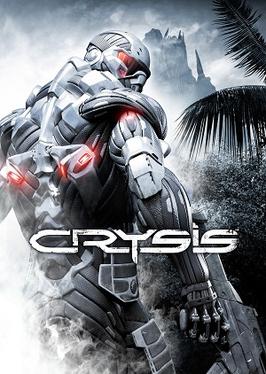
Before humans learned to write, before the pyramids were raised, before an asteroid erased the dinosaurs, something arrived on Earth. It came from the Triangulum Galaxy, a spiral world three million light-years away, from a species with a billion-year history of interstellar colonization. It did not need to conquer. It did not need to settle. It only needed to wait. It buried a communications relay beneath the Antarctic ice, seeded sleeping sentinels near deep-sea vents, and entered a long hibernation. It knew that one day this planet would evolve something worth harvesting. It had time. It was called the Ceph, and every name humanity later gave it—invader, enemy, monster—underestimated its patience and misunderstood humanity’s own role in the long wait. This is the history of Crysis, a story about how humanity stole fire from sleeping gods and was slowly devoured by its own creation.
The Crysis series consists of three main chapters—Crysis (2007), Crysis 2 (2011), and Crysis 3 (2013)—alongside a parallel standalone chapter, Crysis Warhead (2008). The trilogy stretches from the Lingshan Island incident in 2020 to the ruins of New York in 2047, but its roots reach deeper: into a 1908 explosion over Siberia, into one man’s hunger for immortality, and into a living skin that was never designed to be armor. (Crysis, Crysis 2, Crysis 3, Crysis Warhead)
The Tunguska Thief: How Humanity Learned What It Should Not Have Learned
On June 30, 1908, a massive explosion occurred above the Tunguska River valley in Siberia, flattening two thousand square kilometers of forest. The official explanation was a meteor that broke apart in the air. The truth was that a Ceph support vessel had crashed there, leaving behind wreckage no human could understand. Eleven years later, in 1919, a scientist named Jacob Hargreave led a private expedition into the region. Most of his companions died on that journey, but Hargreave returned alive—carrying knowledge reverse-engineered from the wreckage and a life extended by Ceph biology into something close to immortality. He lay in a life-support capsule for more than a century, pale and shrunken, never dying, because he had already woven Ceph biology into his own existence. (Crysis)
Hargreave used what he stole from Tunguska to build an empire. With his partner Karl Rasch, he founded Hargreave-Rasch Biomedical, and a shadow branch of that company—Crynet Systems—became the cradle of the Nanosuit. The Nanosuit was not a human invention. It was a human theft. The suit was grown from Ceph-derived technology: a second skin of carbon nanotubes and adaptive polymers that could harden into armor, cloak its wearer from sight, amplify strength, and store energy like a living battery. Hargreave did not build a tool. He built a cocoon, and he built it because he believed humanity would need to become something other than human to survive what was coming. (Crysis)
Lingshan Island, 2020: The First Awakening
The first modern contact came in 2020, on Lingshan Island in the South China Sea. A team of American archaeologists—escorted by private military contractors—discovered a massive Ceph structure buried beneath a mountain, a relic of the species’ ancient presence on Earth. The North Korean military moved in to seize the site, and the United States responded by deploying Raptor Team, a special operations unit equipped with the latest Nanosuit prototypes. Among them was Nomad, a soldier whose real name is never spoken, and Psycho, a loud, scarred veteran whose story would later be told in Crysis Warhead. (Crysis, Crysis Warhead)
The island was not a ruin. It was a dormant outpost, and the human intrusion woke it. The Ceph emerged from the ice and rock: towering, armored, insect-like soldiers with energy weapons and a collective intelligence that treated individual death as irrelevant. The mountain split open, the sky turned red, and a massive alien warship rose from beneath the island. The Nanosuit, humanity’s stolen gift, was the only reason anyone survived. It allowed Nomad to cloak, to absorb damage, to move through the alien fortress like a ghost. But the suit was also a sign of something worse: the Ceph recognized the Nanosuit. They did not see it as a weapon. They saw it as a part of themselves, a stolen piece of their own biology, and they responded with the cold fury of a species reclaiming its property. (Crysis)
Nomad and Psycho fought their way through the island, destroyed the Ceph warship, and escaped—but the victory was not a victory. The Ceph had been on Earth for millions of years. The Lingshan outpost was one node in a planetary network, and its destruction did not end the invasion. It announced it. Hargreave, watching from his capsule, understood what the soldiers did not: this was not an attack. It was a harvest, and humanity had just proven itself ripe. (Crysis)
New York, 2023: The Plague and the Prophet
Three years later, the Ceph arrived in force. Crysis 2 opens in a New York City that is already dying. The Ceph have released a biological plague—a man-made epidemic grown from their own biology—that is sweeping through the population, killing millions and transforming the dead into something else. The city is quarantined, sealed off by the military, and abandoned to the aliens. Into this nightmare steps Alcatraz, a Marine infected by the plague and left for dead. He is rescued by Prophet, the former leader of Raptor Team, who has been living inside the Nanosuit for years and is no longer entirely human. Prophet drags Alcatraz into the suit, and when Prophet is mortally wounded, he forces Alcatraz to take it. The suit seals itself around Alcatraz’s body, and the man who was Alcatraz begins to disappear. The Nanosuit does not simply protect its wearer. It merges with them. It records their memories, their personality, their fears. And over time, it replaces them. (Crysis 2)
The architect of the human response is Jacob Hargreave, still alive, still speaking through screens and speakers, still treating the Ceph as a problem to be solved with the tools he stole from them. Hargreave believes the Nanosuit is humanity’s only hope, but he also believes that the suit must be controlled—that the man inside it must remain a man. He is opposed by Crynet Systems and its director, Dominic Lockhart, who sees the Nanosuit as a weapon to be mass-produced and sold, and by Tara Strickland, a CIA operative who understands that the Ceph are not an invading army but an immune system, responding to a species that has become a threat. (Crysis 2)
Alcatraz, guided by Prophet’s recorded memories and by the suit’s own evolving intelligence, fights through the ruins of New York. He destroys the Ceph’s central hive, a massive structure buried beneath Central Park, and detonates a biological weapon designed to wipe out the alien presence. The victory is pyrrhic. The Ceph are not defeated; they are delayed. And Alcatraz is no longer a man. The suit has absorbed him. Prophet’s consciousness has merged with his own. The line between the wearer and the armor has dissolved, and what remains is something new: a being that is neither fully human nor fully Ceph, carrying the memories of both. (Crysis 2)
The Liberty Dome, 2047: The Prophet and the Perfect Weapon
Crysis 3 opens twenty-four years later, in 2047. New York has been sealed inside a massive nanodome called the Liberty Dome, built by the now-omnipotent Crynet Systems to contain the Ceph and to create a controlled environment for the development of the ultimate weapon. Inside the dome, the city has been transformed into a rainforest—a lush, overgrown wilderness where the Ceph have evolved new forms, and where Crynet’s soldiers hunt them with Nanosuit technology that has been refined and corrupted. The corporation has become a government, and the government has become a cult. (Crysis 3)
The protagonist is no longer Alcatraz. The suit has fully consumed him, and what walks out of the dome is Prophet—the original wearer, the man who gave his life to save Alcatraz, now reborn as a composite being carrying the memories and personalities of everyone who has worn the suit. Prophet is not a hero in the traditional sense. He is a ghost with a mission: to destroy the Ceph once and for all, and to expose Crynet for what it has become. He is joined by Psycho, the veteran from the first game, now older, scarred, and fighting a personal war against the corporation that created him, and by Tara Strickland, who has spent decades trying to prevent the catastrophe that Crynet is engineering. (Crysis 3)
The truth at the heart of Crysis 3 is that the Ceph are not the only enemy. Crynet has been experimenting with Ceph technology to create a weapon that can control the alien hive mind—a weapon that would make humanity the new masters of the Ceph’s ancient network. The corporation does not want to defeat the Ceph. It wants to replace them. Prophet, carrying the memories of Hargreave and the knowledge of what the Ceph truly are, understands that this is the final betrayal: humanity has spent a century stealing from the Ceph, and now it intends to become them. (Crysis 3)
The game ends in the ruins of the Liberty Dome, with Prophet destroying the Ceph’s central intelligence and the Crynet weapon simultaneously. The Ceph are defeated, but the cost is absolute. The dome collapses. The city is gone. Prophet, carrying the memories of everyone who died to make him, walks into the wasteland carrying the only thing that matters: the knowledge that humanity survived, and the knowledge that it did so by becoming something other than human. (Crysis 3)
Understanding the Full Picture
The tragedy of Crysis is not that humanity was invaded by an ancient alien species. It is that humanity invited the invasion by stealing from the Ceph before it even understood what they were. Jacob Hargreave did not discover the Nanosuit; he looted it from a graveyard. Crynet did not invent the technology that saved the world; it reverse-engineered a biology that was never meant for human hands. Every victory in this saga is built on a theft, and every theft carries a cost that is paid in human identity. The Nanosuit does not just protect its wearer. It consumes them. It absorbs their memories, their personality, their humanity, and it does not give them back. Alcatraz becomes Prophet. Prophet becomes a composite ghost. The man who wears the suit is never the same man who put it on, and the saga’s central question is whether that transformation is a sacrifice or a surrender. (Crysis, Crysis 2, Crysis 3)
What connects the trilogy is the Nanosuit itself—a living artifact that is both humanity’s greatest weapon and its most intimate prison. The suit is the Ceph’s biology repurposed for human survival, and every time a soldier puts it on, they are accepting a bargain they do not fully understand. The Ceph are not the real enemy. The real enemy is the belief that humanity can take whatever it wants from the universe and remain unchanged. The Nanosuit is the physical manifestation of that belief, and the trilogy’s ending is the moment when the suit finally admits what it has always been: a cocoon, not for a human, but for something new. (Crysis, Crysis 2, Crysis 3, Crysis Warhead)
For a newcomer, the clearest path into this saga is the original trilogy in release order: begin with Crysis (or Crysis Remastered) for the Lingshan Island incident and the first contact, then Crysis 2 for the fall of New York and the merging of Alcatraz and Prophet, and finally Crysis 3 for the final confrontation in the Liberty Dome. Crysis Warhead is a parallel story set during the first game, following Psycho’s perspective, and it can be experienced after the original for a deeper understanding of the soldiers who fought the first battle. The order matters less than the through-line: every chapter is another layer of the same theft, and every protagonist is another person who put on the suit and discovered that the suit was already wearing them. The Ceph waited millions of years for humanity to become worth harvesting. Humanity spent a century proving them right. (Crysis, Crysis 2, Crysis 3, Crysis Warhead)