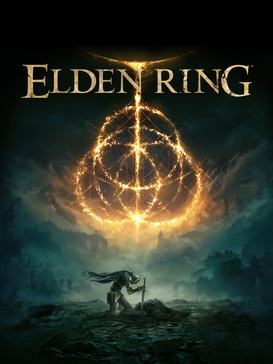
The Broken Throne: A History of the Lands Between
The world is governed by a circle. Not a circle of stone or gold, but a ring of law—a Elden Ring—that defines what is possible and what is forbidden. It dictates that the sun will rise, that water will flow downhill, and, most crucially, that death is a final door through which all souls must pass. For a long age, this circle was whole. It rested in the chest of a goddess, and its light sustained a great, shining tree whose branches touched the sky, a tree called the Erdtree. Its golden leaves showered the land with a warm, perpetual twilight, and its sap was said to grant long life and profound grace. The people of the Lands Between lived beneath its boughs, blessed by the light of the Golden Order, a divine system of law and hierarchy that seemed as eternal as the stars themselves.
Then the circle was broken. Not by an invader from beyond the stars, nor by a rebellion of the poor and desperate, but by the goddess herself. She took a hammer to the very laws of reality, and in that single, shattering act, she condemned her children, her kingdom, and the entire world to a slow, grinding ruin. The golden twilight flickered and dimmed. The Erdtree, once a beacon of life, became a monument to a wound that would not heal. This is the story of why she did it, and of the family that tore itself apart in the aftermath.
The Goddess and Her Golden Cage
Before she was a goddess, Queen Marika was a woman of the Numen, a long-lived and enigmatic people who came to the Lands Between from somewhere beyond the known world. She was chosen by an unseen cosmic entity—the Greater Will—to be its vessel, its representative on earth. The Greater Will is not a god of flesh and blood; it is a vast, impersonal force that seeks to impose order upon the chaos of existence. It found in Marika a will strong enough to bear its power, and through her, it established the Golden Order: a system of divine law and social hierarchy built around the worship of the Erdtree, the massive, luminous tree that served as the physical anchor of the Elden Ring’s power. Marika was the god-queen, the undisputed sovereign of a realm bathed in perpetual, golden twilight. Her word was law. Her will was the will of the world.
To build her order, she needed a warlord. She found one in a chieftain named Hoarah Loux, a brutal and magnificent fighter from the Badlands, a harsh and distant land beyond the civilized borders. She took him as her first husband and gave him a new name: Godfrey, the First Elden Lord. Together, they conquered the enemies of the Erdtree. Godfrey was the instrument of Marika’s expansion, a living weapon she pointed at giants and dragons and rival kings. He was loyal, powerful, and, in his own way, beloved. His strength was legendary; his roar could shake mountains, and his axe could cleave the hide of a dragon. He was the muscle and the fury of the Golden Order, and for a time, he was content to be so.
But a weapon is only useful while there are enemies to strike. When Godfrey’s last worthy opponent fell—when the giants were buried and the dragons were pacified—his purpose evaporated. The fire in his eyes dimmed. He had become a king of a peaceful realm, a warrior without a war. Marika, seeing a tool that had outlived its use, stripped him of the Grace of the Erdtree—the golden light that marked him as blessed—and exiled him and his warriors from the Lands Between. They became the Tarnished: a people cast out, wandering a barren world beyond the reach of the Erdtree’s light. This was Marika’s first great cruelty, and it was done without a moment’s hesitation. She did not banish him out of malice, perhaps, but out of a cold, divine pragmatism. The Golden Order had no place for a king without a war.
With Godfrey gone, Marika needed a new consort. She chose Radagon, a red-haired champion of formidable power. There was a complication: Radagon was already married to Rennala, the Queen of the Full Moon and ruler of the Carian royal family, a house of sorcerers and stargazers who had long been rivals to the Erdtree’s influence. Radagon abandoned Rennala—leaving her heartbroken and her realm in decline—to answer Marika’s summons. But the true horror of their union was a secret known only to the goddess herself: Marika and Radagon were not two people. They were two halves of a single being, two souls sharing one body, forever locked in a union that was both a marriage and a monstrous self-consumption. They were the same person, and yet they were distinct—one the goddess of the Erdtree, the other a champion of the Golden Order. Their marriage was a paradox, a divine impossibility made flesh. And from this union came children who were both blessed and cursed by their parents’ tangled nature.
A Family Forged in Misfortune
Marika’s reign was marked by a deep, hypocritical cruelty. This is most evident in her treatment of her own children. Her first husband, Godfrey, gave her three sons.
The eldest was Godwyn the Golden. He was everything a demigod prince should be: beautiful, brave, and beloved. He defeated a great dragon in single combat and, in victory, forged a friendship with it, earning the respect of dragonkind and securing the Erdtree’s borders. He was the golden child in every sense, the shining heir to a shining age. His smile could calm a riot, and his presence brought hope to the darkest corners of the realm. He was the one child Marika truly loved, the one she believed would carry her order into eternity.
Her other two sons by Godfrey were twins: Morgott and Mohg. They were born as Omens, a condition marked by gnarled horns and a connection to the ancient, wild life-force that predated the Erdtree. In Marika’s ordered world, Omens were considered cursed and unclean, omens of bad luck and primitive chaos. The twins were taken from their mother at birth and cast into the sewers beneath the royal capital, Leyndell, to live out their lives in darkness and shame, never to see the sun. This was Marika’s second great cruelty: the abandonment of her own children for the crime of being born different. They grew up in filth and isolation, feeding on scraps and dreaming of the light they had been denied.
Her second husband, Radagon, gave her more children, though their lineage was tangled by his dual nature. With Radagon, Marika had Miquella and Malenia, twins who were both blessed and cursed. Miquella was beloved by all who met him, a being of pure charm and genius, but he was cursed to remain a child forever, never growing into the power he was meant to wield. His body was trapped in eternal youth, but his mind was ancient and vast. He sought to cure his sister’s rot and to break the cycle of suffering that his family had created. Malenia was a peerless warrior, but she was born with the Scarlet Rot, a divine disease that ate away at her flesh and would one day consume entire continents. She was a blade without equal, but every swing of her sword spread the rot further, a tragic irony that defined her existence. She loved her brother Miquella more than anything, and he loved her in return, a bond of pure devotion in a family of betrayals.
Through Radagon’s previous marriage to Rennala, Marika also gained three stepchildren who became demigods upon her union with their father: Radahn, Rykard, and Ranni. Radahn was a titanic general who mastered gravity magic and halted the very stars in their tracks. He was a hero of the people, a giant of a man who learned to ride a horse so small it seemed absurd, and who held the cosmos itself in check. Rykard was a cunning and ambitious lord who eventually fed himself to a great serpent, becoming a blasphemous monster in his quest to devour the gods. He rejected the Golden Order and sought to consume it, to become a god-eater. And Ranni, the youngest, was a witch of cold intellect and fierce independence, determined to escape the fate that Marika’s order had planned for her. She was a prisoner of her own divine lineage, and she would do anything to be free.
This, then, was the royal family: a goddess who would sacrifice her own children for the sake of her order, a fractured god who was his own wife, two sons left to rot in a sewer, a daughter rotting from within, a stepdaughter plotting her escape, and a golden heir who was the only untainted thing in a dynasty of secrets and lies. They were not monsters, not all of them. They were people—broken, lonely, desperate people—caught in the machinery of a divine order that demanded too much and gave too little.
The Night the Death Was Stolen
To understand the catastrophe that followed, one must understand the first and greatest crime of the Golden Order: the removal of death. In the beginning, the Elden Ring contained a Rune of Death, a law that ensured all things—even demigods—would eventually die. Death was not a punishment; it was a natural part of the cycle, a door through which all souls passed to whatever lay beyond. Marika, desiring an eternal age for her and her children, plucked this rune from the Ring and gave it to her loyal shadow, a beast-knight named Maliketh, the Black Blade, to guard for all time. Maliketh sealed the rune within his own flesh, and death ceased to be a natural part of life in the Lands Between. The Golden Order became a deathless order, a stagnant, glittering cage.
The practical impact of this act was profound and terrible. Without death, there was no release from suffering. The sick lingered in agony for centuries. The old did not pass on; they simply withered and weakened, their minds fading while their bodies refused to die. The land itself became cluttered with the undying, and the natural cycles of decay and renewal were broken. The Erdtree’s roots, which once fed on the remains of the dead, now had nothing to consume. The world became a museum of itself, preserved but not alive. This was the Golden Order’s greatest flaw: it sought to conquer death, but in doing so, it conquered life.
This cage was intolerable to Ranni, Marika’s stepdaughter. She did not wish to be a pawn in the designs of the Greater Will, nor did she wish to inherit a role in her stepmother’s eternal, suffocating order. She wanted to be free. And so, she conceived a terrible plan.
Ranni stole a fragment of the Rune of Death from the unsuspecting Maliketh. With this stolen power, she had enchanted daggers forged—the Black Knives—capable of killing the immortal. On a night that would be remembered forever as the Night of the Black Knives, a group of assassins, said to be of Marika’s own Numen people, crept into the royal capital. They moved like shadows, silent and precise, and they struck without warning.
Their target was not Marika, nor Radagon. Their target was Godwyn the Golden, the beloved firstborn son. The assassins struck him down, their black blades carving a half-circle curse-mark into his flesh. At the exact same moment, in a distant tower, Ranni used the other half of the mark to destroy her own body, binding her soul to a doll so that she might live on, free from the flesh and the fate the Greater Will had chosen for her. She sacrificed her physical form to escape her destiny, and in doing so, she condemned Godwyn to a fate worse than death.
The plan worked, with a horrifying, unintended consequence. The rune’s power was split. Ranni’s body died, but her soul lived on. Godwyn’s soul was destroyed—utterly annihilated—but his body lived on, a soulless, cancerous husk. Godwyn became the first of the Those Who Live in Death, a new and unnatural form of existence. His corpse was buried at the roots of the Erdtree, and its corruption spread through the roots like a plague, sprouting Deathroot across the land and causing more and more soulless bodies to rise. The natural order, already wounded by the removal of death, was now infected with a parody of life. The dead did not rest; they walked, they moaned, they attacked the living. The Golden Order had lost control of its greatest secret.
The Shattering and the War of the Broken
When Marika learned what had happened to her golden son, something inside her broke. The grief of a mother was fused with the rage of a goddess who had been outmaneuvered. The Golden Order, the system she had built at the cost of her first husband and her twin sons, had failed to protect the one child she truly cherished. In her fury, she took her hammer and shattered the Elden Ring itself.
This was not a calculated political move. It was an act of apocalyptic grief. The shattering of the Ring sent its fragments—Great Runes—flying across the Lands Between. These runes were not mere symbols; they were pieces of reality’s operating system, each carrying a measure of divine power. The demigods, Marika’s surviving children and stepchildren, gathered these shards. And then, driven by ambition, fear, and old resentments, they went to war.
This was The Shattering: a civil war of unprecedented scale and brutality that lasted for a thousand years. It was not a clean war of armies on a battlefield. It was a dynastic apocalypse, a family feud that consumed a continent.
- Godrick the Grafted, a distant descendant of the golden line, sought to compensate for his frailty by grafting the limbs of his enemies onto his own body, becoming a grotesque monument to ambition. He was a pale imitation of his ancestors, a man who believed that if he could just collect enough strength, he could be worthy of the throne.
- Radahn, the titanic general, held the stars in place and fought to a standstill against Malenia, the rotting blade. Their duel was so catastrophic that it infected an entire region, Caelid, with Malenia’s Scarlet Rot, turning it into a crimson wasteland of madness and decay. Radahn himself was driven mad by the rot, reduced to a mindless beast who wandered the battlefield, devouring his own soldiers. Malenia, meanwhile, fell into a deep sleep, her body finally succumbing to the rot she had spread.
- Rykard, the serpent-lord, rejected the Golden Order entirely, seeking to devour the gods themselves and consume the world in his blasphemous hunger. He became a monster, a living furnace of ambition, and his domain became a place of torture and excess.
- Morgott, the Omen twin who had been thrown into the sewer, emerged to defend the very Golden Order that had rejected him. He loved his mother and his family’s legacy with a desperate, unrequited loyalty, and he held the capital against all comers, calling his siblings “willful traitors”. He was the only one who stayed true to the dream, even though the dream had never included him. His tragedy is perhaps the deepest of all: he defended a system that saw him as an abomination.
- His brother, Mohg, embraced his cursed blood and founded a dark cult, seeking to raise a new dynasty with Miquella—the eternal child—as its god, in a twisted mockery of his mother’s order. Mohg was a predator, a manipulator, but he was also a product of his abandonment, a child who had been taught that love was something you took by force.
The war had no victor. It only had survivors, and even they were broken things—mad, mutated, or locked in an endless, stalemated siege. The Lands Between was left a graveyard of heroes and a monument to a family’s self-destruction. The capital, Leyndell, stood besieged but unbroken, its gates sealed by Morgott’s will. Caelid was a rotting hellscape. Mount Gelmir was a nest of serpents. The lakes of Liurnia were flooded with the tears of a broken queen. And the Erdtree, the symbol of all that was good, stood silent and dark, its light fading with each passing year.
The Return of the Exiled
And what of Marika? For her crime of shattering the Ring, the Greater Will punished her. She was imprisoned within the Erdtree itself, crucified upon its inner bark, her body broken and her mind shattered. The god-queen became a prisoner in her own church, a silent witness to the ruin of her legacy. Her consort, Radagon, was bound to her, two halves of the same being trapped together in an eternal, agonizing union. They were the heart of the Erdtree, and their heart was broken.
But Marika had one final gambit. Long ago, she had exiled Godfrey and his warriors, the Tarnished. Now, in the aftermath of the Shattering, the Erdtree’s grace reached out across the void and called them home. The Tarnished—descendants of the exiled, including the one who would become the story’s protagonist—were summoned back to the Lands Between. Their purpose was simple: to seek the Great Runes, reforge the Elden Ring, and become the new Elden Lord. It was a chance to mend the broken world, or to claim it for themselves. The Grace of the Erdtree guided them like a compass, pointing them toward the shards of the Ring and the demigods who held them.
The Tarnished who answers this call must fight their way through the ruins of the Shattering. They must confront the mad remnants of Marika’s family: the grafted Godrick, the rotted Radahn, the serpentine Rykard, the loyal Morgott, and the cultist Mohg. They must journey to the heart of the Erdtree, face the imprisoned Radagon and the cosmic beast that is the Greater Will’s true form, and make a final choice.
That choice is not a simple one. To mend the Elden Ring as it was is to restore the Golden Order, with all its flaws and cruelties. To usher in a new age with Ranni, the witch who killed her own body to be free, is to embrace a dark, uncertain future, a thousand-year voyage of solitude and stars. To embrace the Frenzied Flame is to burn it all down, to end the suffering by ending existence itself. And there are other paths, hidden and strange, each representing a different answer to the question: what is the world for?
Understanding the Full Picture
The story of Elden Ring is not a tale of good versus evil. It is a tragedy of a family, a tragedy of a goddess who tried to build a perfect, deathless world and, in doing so, created a cage of unimaginable cruelty. Marika sacrificed her first husband to conquest, abandoned her twin sons to a sewer, and engineered the very order that her stepdaughter, Ranni, would rather destroy herself than inherit. When her favorite son was murdered, her grief was so vast that she shattered the laws of reality, plunging her already-fractured family into a war that consumed everything.
Every demigod you meet is a wound that Marika inflicted, or a wound that Marika’s order inflicted upon them. Morgott is the loyal son who was never loved. Ranni is the prisoner who chose to kill her own body to escape. Radahn is the mighty general reduced to a mindless beast, and Malenia is the peerless warrior who cannot stop rotting. Miquella is the child who never grew up, forever seeking a cure for his sister’s pain. Mohg is the abandoned twin who turned his loneliness into a dark religion. Rykard is the ambitious lord who thought he could devour God himself. Godwyn is the golden son whose death broke the world. And Godfrey, the first Elden Lord, is the exile who returned to find his home in ruins.
The Tarnished’s journey is a long, hard walk through the wreckage of this family’s love and hate. It is a pilgrimage through grief, a slow unraveling of a mystery that began with a mother’s desire for control and ended with a world in ashes. The question the story asks is not “who will win?” but “what is worth saving?” And the answer, as with all great tragedies, is left to the one who walks the final mile.
For an outsider trying to piece together the wider universe, the logical reading order is to follow the emotional thread of the family:
- Begin with the Mother: Understand Marika, her origins, her two marriages, and her decision to remove death from the world. Everything flows from her desire for control and her subsequent grief. Learn about the Greater Will and the Golden Order, and what they demanded of her.
- Trace the Wound: Learn about the Night of Black Knives and the death of Godwyn the Golden. This is the crime that broke the world. Understand Ranni’s desperate gamble and the unintended horror of the soulless prince.
- Follow the Scattered Children: Meet the demigods not as obstacles, but as broken people. Understand Morgott’s tragic loyalty, Ranni’s desperate bid for freedom, and the ruin of Radahn and Malenia. See how each of them carries a piece of their mother’s legacy, for good and for ill.
- Witness the War: Explore the Shattering and its aftermath. See how the family’s feud turned a continent into a graveyard. Understand the stalemate and the suffering of the common people.
- Arrive at the Choice: The Tarnished’s final decision—to mend the Ring as it was, to usher in a new age with Ranni, or to embrace something else entirely—is the only remaining question. The tragedy is complete. The only thing left to decide is what, if anything, can be salvaged from the ruins of a goddess’s broken heart.
This is not a story with a happy ending. It is a story about the cost of perfection, the weight of legacy, and the terrible things a mother will do for her children. It is a story about a broken family and a broken world, and the long, lonely road of the one who tries to put it back together.