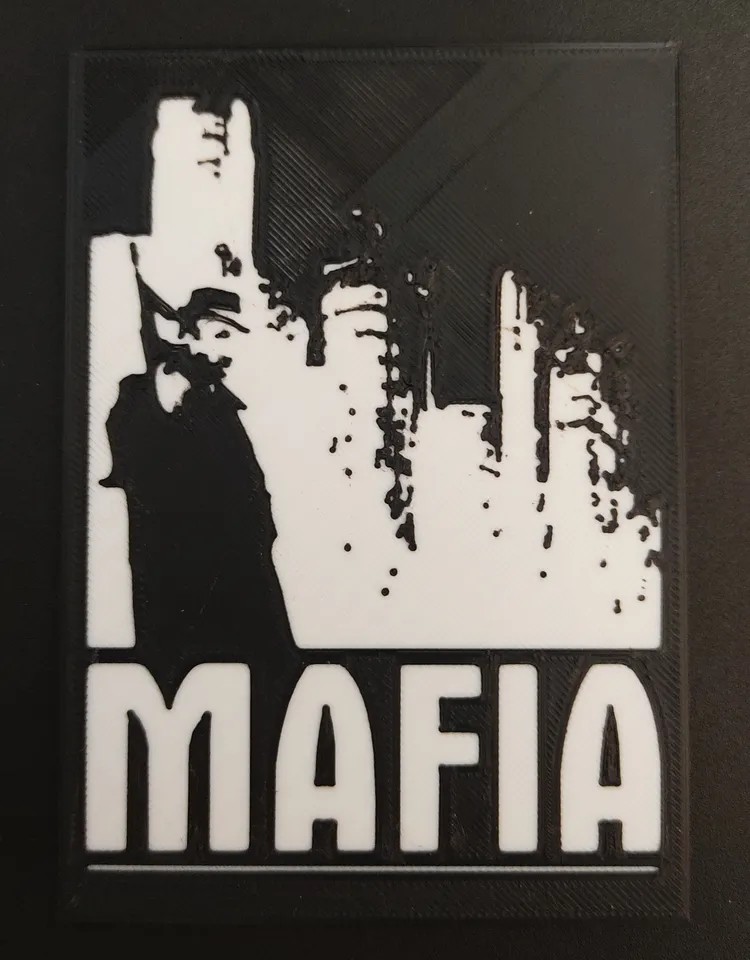
The rain falls on Lost Heaven the way it always has: cold, indifferent, washing the blood from the cobblestones before anyone can see it. A taxi driver named Tommy Angelo is driving through the night, minding his own business, when two men stumble into his back seat with guns in their hands and murder in their eyes. He does not know it yet, but that single act of mercy—the decision to floor the accelerator and help two strangers escape a rival gang—will cost him everything. His job. His innocence. His family. And eventually, his life. This is the story of Mafia, a saga not about power or money, but about the price of belonging. It is a story about men who join criminal families because their real families are broken, and who discover too late that the family they chose will ask them to break everything else in return.
The Mafia series spans three mainline chapters—Mafia (2002, remade as Mafia: Definitive Edition in 2020), Mafia II (2010), and Mafia III (2016)—each set in a different American city during a different era of organized crime. The games are connected not by a single continuous plot but by a shared world, overlapping characters, and a single, unbroken meditation on loyalty, betrayal, and the impossibility of walking away. (Mafia: Definitive Edition, Mafia II, Mafia III)
Lost Heaven, 1930–1938: The Taxi Driver Who Became a Killer
Mafia: The City of Lost Heaven begins in the autumn of 1930, in a city modeled on Prohibition-era Chicago and New York. Tommy Angelo is a working man, a taxi driver with a wife and a daughter and a life that is small but honest. When he helps two gangsters escape an ambush, he is drawn into the world of the Salieri crime family, led by the avuncular Don Ennio Salieri. Salieri is not a monster in the ordinary sense. He is a businessman, a patriarch, a man who speaks of loyalty and respect and family the way a priest speaks of salvation. Tommy joins him not out of greed but out of necessity: the rival Morello family, led by Salieri’s ruthless former partner, will kill him if he does not find protection. (Mafia: Definitive Edition)
Tommy rises through the ranks alongside two men who become his closest friends: Paulie Lombardo, a cheerful, reckless killer with a good heart, and Sam Trapani, a quieter, more calculating presence who watches everything and says little. The three of them carry out the family’s dirty work—beatings, extortion, assassinations—and Tommy tells himself that he is doing it for his wife and daughter, that he will get out before the darkness touches them. He does not get out. The Salieri family’s war with the Morello family escalates, and Tommy is drawn deeper into the violence. He kills Don Morello himself, shooting him down as he tries to flee the city by plane. He becomes a made man, a capo, a man of respect. And then the betrayal comes. (Mafia: Definitive Edition)
Salieri, paranoid and greedy, refuses to let Tommy and Paulie retire with the money they have earned. Paulie is killed—it is heavily implied that Sam, their closest friend, pulled the trigger on Salieri’s orders. Tommy, realizing that he is next, makes a choice that will define the rest of his life. He goes to Detective Norman, a police officer who has been hunting the Salieri family for years, and agrees to testify against them in exchange for witness protection. He gives up everything: his name, his city, his friends, the only world he has ever known. The Salieri family is shattered by his testimony, and Tommy disappears into a quiet, anonymous life. (Mafia: Definitive Edition)
The epilogue of Mafia: Definitive Edition—and the original 2002 game—is one of the most haunting endings in the medium. Years later, in 1951, Tommy is living under an assumed name, watering his lawn, watching his daughter play. Two men walk up the driveway. They are Vito Scaletta and Joe Barbaro, two young gangsters from a different city, and they have been sent by the remnants of the Salieri family to deliver a message. Tommy recognizes them for what they are before they speak. He does not run. He does not beg. He simply says that he is ready. They shoot him in his own front yard, and the last words he hears are a greeting from Don Salieri, a man he betrayed a lifetime ago. The past does not let go. It never does. (Mafia: Definitive Edition, Mafia II)
Empire Bay, 1945–1951: The Immigrant’s Dream and the Friend Who Paid for It
Mafia II moves the story to Empire Bay, a city modeled on postwar New York, and introduces Vito Scaletta, a young man born in Sicily and raised in poverty in the immigrant quarters of the city. Vito’s father is a drunk, his family is drowning in debt, and the only person who has ever believed in him is his best friend, Joe Barbaro. Joe is loud, impulsive, and generous, a man who treats loyalty as a religion and violence as a language he was born speaking. When Vito is arrested for a robbery, he is given a choice: prison or the army. He chooses the army, serves in Sicily during World War II, and returns to Empire Bay in 1945 with a Purple Heart and a debt to a loan shark who is threatening his mother and sister. (Mafia II)
Joe introduces Vito to the Falcone family, one of the major crime organizations in Empire Bay, and Vito begins the same climb that Tommy Angelo made a decade earlier. He does the work. He earns the trust. He becomes a made man. But Mafia II is not a story about success. It is a story about the fragility of everything a man builds. Vito’s rise is interrupted by a six-year prison sentence, and when he emerges in 1951, the world has changed. The Falcone family is at war with the Vinci and Clemente families, the Chinese Triads are moving into the drug trade, and Vito’s attempts to make a place for himself keep colliding with forces he cannot control. (Mafia II)
The emotional core of Mafia II is the friendship between Vito and Joe. They are brothers in everything but blood, and their loyalty to each other is the only thing in their lives that is not for sale. But the game’s ending is a knife to the heart. Vito is forced to kill Don Carlo Falcone, the man he served, in order to save his own life. Leo Galante, the consigliere of the Vinci family and the man who has been quietly shaping events from the shadows, agrees to spare Vito—but not Joe. Joe is taken away in a separate car, and the game ends with Vito sitting beside Leo, asking where his friend is going, and receiving no answer. The final shot is of Joe’s car driving into the darkness, and the audience is left with the same question Vito is: whether Joe is alive or dead. Mafia III later reveals that Joe survived, but the ambiguity of Mafia II’s ending is the point. Loyalty does not protect you. It only determines who is allowed to mourn you. (Mafia II, Mafia III)
New Bordeaux, 1968: The Soldier Who Burned the South
Mafia III is the boldest and most painful chapter of the saga. It moves the story to New Bordeaux, a city modeled on New Orleans, in 1968—the year of assassinations, protests, and a war in Vietnam that is tearing American families apart. The protagonist is Lincoln Clay, a mixed-race Vietnam veteran who was orphaned as a child and raised by Sammy Robinson, the leader of the city’s Black mob. Lincoln returns from the war looking for a place to belong, and Sammy gives him one: a family, a purpose, a home. (Mafia III)
That home is destroyed in the first hour of the game. Sal Marcano, the head of the Italian mob that controls New Bordeaux, recruits Lincoln for a heist on the Federal Reserve. The heist succeeds, and then Marcano betrays him. Sammy is murdered. Lincoln’s surrogate family is wiped out. Lincoln himself is shot in the head and left for dead. He survives—barely—and when he wakes, he has nothing left but a single, consuming purpose: to tear Sal Marcano’s empire apart, piece by piece, and to make him watch it burn. (Mafia III)
Lincoln’s war is not fought alone. He builds an alliance of the city’s marginalized factions: the Haitian mob, the Irish mob, and Vito Scaletta himself, the protagonist of Mafia II, now older and living in New Bordeaux as a lieutenant under Marcano. Vito’s presence is the thread that ties the trilogy together. He is the living proof that the dream of the Mafia—the dream of respect, of family, of a place at the table—is a lie. Vito got out of Empire Bay, but he did not get out of the life. He is still doing the same work, still taking orders, still watching the people he loves disappear. Lincoln, by contrast, is not trying to climb the ladder. He is trying to burn it down. (Mafia III)
The game’s ending depends on the choices the player makes, but the most resonant conclusion is the one in which Lincoln survives, leaves New Bordeaux, and drives into the American landscape with no destination and no family left to protect. He has won. He has killed Sal Marcano. He has avenged Sammy. And he has become something he never wanted to be: a man who has nothing left to lose. Mafia III is not a power fantasy. It is a tragedy about what vengeance costs the person who survives it. (Mafia III)
The Old Country: Before the Names, Before the Myth
The most recent chapter in the saga—Mafia: The Old Country, released in 2025—travels backward rather than forward, to Sicily in the early 1900s, to the world before the American Mafia existed. It follows a young man named Enzo Favara, who is drawn into the Torrisi crime family and learns the brutal codes of loyalty and silence that will one day be exported to Lost Heaven, Empire Bay, and New Bordeaux. The game is a prequel not just in chronology but in theme: it shows the seed from which every later tragedy grows. The characters who will become legends in America—Leo Galante, Franco Vinci, Sam Trapani, Ennio Salieri—appear here as young men, before their names meant anything, before the violence had a system, before the family became a business. (Mafia: The Old Country)
The Old Country is not required to understand the main trilogy, but it deepens the trilogy’s tragedy. The men who will one day order executions and betray their closest friends were once boys in a poor, beautiful country, learning from fathers and uncles that the only law that matters is the law of the family. The saga’s central question—whether loyalty is a virtue or a trap—is asked here for the first time, in its purest and most innocent form. (Mafia: The Old Country)
Understanding the Full Picture
The tragedy of Mafia is not that the criminals are evil. It is that they are human. Tommy Angelo loved his wife and daughter and still put them in danger because he could not say no to a family that offered him belonging. Vito Scaletta loved Joe Barbaro like a brother and still watched him drive away into an uncertain fate because the men above him had decided that one life was an acceptable price for peace. Lincoln Clay loved Sammy Robinson and lost him, and then became the thing that had taken him: a warlord who measures his victory in corpses. The saga does not glorify the Mafia. It shows it for what it is: a system that takes the best parts of human nature—loyalty, sacrifice, love—and turns them into instruments of control. The family is real. That is what makes the betrayal so devastating. (Mafia: Definitive Edition, Mafia II, Mafia III)
What connects every chapter is the Italian immigrant experience—the poverty, the exclusion, the desperate need to belong that made the Mafia a refuge for men whose real families had been ground down by a country that did not want them. Tommy, Vito, Lincoln, and Enzo are all outsiders in different ways, and the Mafia is the only institution that ever offered them a place. The tragedy is that the place was never real. It was always conditional, always temporary, always revocable by men who had made the same deal and were now enforcing it on the next generation. (Mafia: The Old Country, Mafia: Definitive Edition, Mafia II, Mafia III)
For a newcomer seeking a path into this saga, the clearest entry is Mafia: Definitive Edition, the modern remake of the first game, which tells the foundational story of Tommy Angelo with the benefit of everything the series has learned since. From there, Mafia II is the emotional and thematic heart of the trilogy, the story of Vito and Joe and the friendship that survives everything except the men who own it. Then Mafia III, which is the most ambitious and the most painful, the story of what happens when a man decides that the only way to survive the family is to destroy it. Mafia: The Old Country can be read first, last, or in between—it is a prologue to the myth, not a chapter in the plot—but it is best experienced after the trilogy, when the names of the young men in Sicily carry the weight of everything they will become. The order matters less than the lesson: every family asks for loyalty, and every family decides when loyalty is no longer convenient. The only question is whether you will be the one who walks away, or the one who is left standing over the grave. (Mafia: The Old Country, Mafia: Definitive Edition, Mafia II, Mafia III)