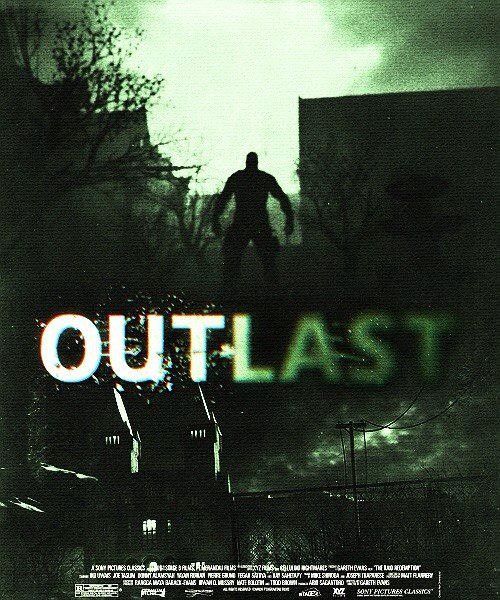
The world of Outlast does not begin with a monster. It begins with a contract, a signature, and a quiet understanding that certain people—the homeless, the undocumented, the inconvenient, the already broken—can be made to disappear without anyone asking questions. The horror that follows is not supernatural. It is bureaucratic. It is a corporation called Murkoff, and its business is the systematic dismantling of the human mind in the name of science, profit, and control. What follows is the complete history of that business: the Nazi scientist who built the machine, the asylum where it first screamed to life, the desert cult that became its unwitting experiment, and the long, cold shadow it casts across every life it touches.
The Inheritance of Cruelty: Wernicke, the War, and the Machine
The intellectual foundation of every nightmare in this saga was laid in Nazi Germany, in the laboratories of a scientist named Dr. Rudolf Gustav Wernicke. Wernicke was a pioneer in the study of the mind’s relationship to the body, and his research into a process he called the Morphogenic Engine was intended to do something that sounds, at first, like a kind of miracle: to allow a human being to control a swarm of microscopic machines through the power of a lucid dream[reference:0]. The engine did not merely read brainwaves. It forced them into patterns that collapsed the ordinary boundaries of the self, peeling back the layers of sanity until the patient’s mind was raw and open and capable of reaching into the swarm[reference:1].
Wernicke’s work was not a secret to the German war machine, and when the war ended, it was not abandoned. It was stolen. Under a program designed to harvest the scientific minds of the defeated enemy, Wernicke was quietly brought to the United States, his past buried, his research given a new home[reference:2]. He was not put on trial. He was put in charge. And the corporation that gave him his new laboratory was Murkoff, a transnational private contractor with a talent for making unpleasant things vanish[reference:3].
Murkoff’s interest in Wernicke was not philosophical. It was practical. A man who could control a swarm of nanites through his mind was not a scientist’s dream. He was a weapon. A being who could walk through walls, consume flesh, and reform from any wound was the ultimate soldier, the ultimate assassin, the ultimate instrument of control. Wernicke called this theoretical being the Walrider, and Murkoff wanted to build one[reference:4]. The only problem was the cost. The Morphogenic Engine did not work on healthy minds. It required a subject whose sanity had already been destroyed—someone who had witnessed enough horror that the engine could catch hold of the wreckage and pull something new out of it. Only a person who had been broken could become the host of the swarm[reference:5]. Murkoff did not see this as an obstacle. It saw it as an invitation.
Mount Massive Asylum: The Factory of Broken Minds
In 2009, Murkoff reopened Mount Massive Asylum, a vast, decaying psychiatric hospital in the mountains of Colorado, under the public guise of a charitable institution[reference:6]. Behind its walls, in laboratories buried deep beneath the wards, they built the Morphogenic Engine and began the work that would become known as Project Walrider[reference:7]. The patients—Variants, in Murkoff’s clinical language—were subjected to a regime of psychological torture designed to strip away every defense the mind could raise. They were shown films of violence and mutilation, kept in isolation, drugged, and pushed to the edge of complete psychic collapse. Those who survived the therapy were placed inside the engine itself: suspended in fluid-filled pods, tubes pushed into their bodies, precursor molecules injected into their blood so that their own cells could assemble the nanites that would become the swarm[reference:8].
Most of them died. Some became something worse than dead. The Variants who emerged from the failed experiments were no longer entirely human. Some, like Chris Walker, a former soldier, were transformed into towering, deformed giants driven by rage and hunger. Others became crawling, whispering things that haunted the vents and the shadows. Murkoff used its own staff as test subjects when they became inconvenient—Dr. Richard Trager, a surgeon on the project, was turned into a Variant after he began asking questions he should not have asked[reference:9]. The asylum became a machine for producing suffering, and the suffering was the point, because suffering was the only fuel the Morphogenic Engine would accept.
Then came William “Billy” Hope. Billy was a patient, a young man with a history of violence and a mind that had been fractured long before Murkoff ever touched him. He was placed in the engine, and something unprecedented happened. Billy did not break. He ascended. He achieved what Wernicke called a lateral ascension, a state of consciousness in which the mind could fully merge with the nanite swarm and command it as an extension of its own will[reference:10]. Billy became the first successful host of the Walrider. But the Walrider did not obey. It was controlled by Billy’s demented, furious mind, and Billy’s mind wanted to kill. The swarm escaped its containment and began to slaughter everyone in the asylum, Murkoff employee and patient alike. The Variants, already insane and now free of their restraints, rose up in a wave of violence that consumed the entire facility. Mount Massive became a charnel house, and the night that followed would be remembered by the few who survived it as the worst night of their lives[reference:11].
The Journalist and the Whistleblower: Two Men, One Night, Two Fates
The first witness to the Mount Massive disaster was Miles Upshur, an investigative journalist who had spent his career chasing stories that powerful people wanted buried. A whistleblower inside Murkoff had sent him a lead, and Miles drove to the asylum expecting to find evidence of corruption. What he found was a building full of screaming, a swarm of something that moved like smoke and tore men apart, and a gallery of Variants who wanted to wear his skin. Miles had no weapons, no training, and no way out. His only advantage was his camera, and he used it to document everything he saw, because he believed that the truth, once recorded, could not be killed[reference:12].
Miles made his way down into the underground laboratory, where he found Dr. Wernicke, ancient and frail, still tending the machine he had built. Wernicke told Miles that the only way to stop the Walrider was to kill its host. Billy Hope was still alive, still suspended in the engine, still dreaming the swarm into existence. Miles shut down the life support systems that kept Billy alive, and Billy died. For a moment, the Walrider was without a host, a formless cloud of nanites searching for a mind to anchor it. And then it found Miles. The swarm poured into his body, sealing his wounds, rebuilding his flesh, and making him its new host[reference:13]. Miles limped toward the exit, only to be met by Wernicke and a squad of armed men. They shot him, and he fell—and then the Walrider rose, and the soldiers learned that bullets mean nothing to a man who is no longer entirely a man[reference:14].
The second witness was Waylon Park, a software engineer who had taken a short contract with Murkoff and had been assigned to work on the Morphogenic Engine’s computer systems. Waylon was not a hero. He was a husband and a father who wanted to go home to his wife and children, and the things he saw inside Mount Massive made him sick. He sent an anonymous email to journalists around the world, including Miles, begging someone to expose what was happening. Murkoff discovered the leak and had Waylon seized and subjected to the engine as punishment. He was rescued from the process only by the chaos of the Walrider’s escape, and he spent the night of the disaster fighting his way through the asylum alongside Miles, though the two men never met[reference:15]. Waylon encountered horrors that Miles did not: Eddie Gluskin, the Groom, a Variant who had been driven by the engine into a delusion that he was building a bride out of the bodies of other patients, and who wanted Waylon to be his wife[reference:16]. Waylon survived, escaped Mount Massive, and uploaded his footage to a leaking website. He was met by a shadowy figure who told him that his evidence would ruin Murkoff forever, and that Murkoff would spend the rest of its existence trying to hurt him in return[reference:17]. Waylon Park got his life back. Miles Upshur became something that could never have a life again.
The Desert and the Radio Towers: Temple Gate and the Second Experiment
Mount Massive was not the end of Murkoff’s work. It was a prototype. The Walrider was a weapon that could be aimed at a single man, a single building, a single city, but Murkoff’s ambitions were larger than that. They wanted a method of control that could be applied to entire populations, and the key to that method was not a swarm of nanites but something far simpler: microwave radiation.
In the remote desert of northern Arizona, in a valley that the Havasupai people had once held sacred, Murkoff built a settlement called Temple Gate and filled it with a congregation of believers[reference:18]. The settlement was the home of a doomsday cult called the Testament of the New Ezekiel, a Christian sect led by a self-appointed prophet named Sullivan Knoth[reference:19]. Knoth preached that the end of the world was coming, that a child would be born who would be the Anti-Christ, and that the faithful were required to murder every infant in the community to prevent that birth. His followers believed him completely. They butchered their own children, mutilated themselves, and prepared for a judgment that never came.
What none of them knew—what Knoth himself may not have fully understood—was that Temple Gate was not a refuge. It was a laboratory[reference:20]. Murkoff had surrounded the valley with radio towers that broadcast a constant signal into the brains of everyone who lived there. The signal did not create the cult. It amplified it. It took the ordinary fears and cruelties of a closed community and pushed them into psychosis, making the people of Temple Gate unable to distinguish between Knoth’s sermons and reality[reference:21]. The cult was not an accident. It was a product. And the birth of the Anti-Christ that Knoth feared was not a prophecy. It was a controlled variable in an experiment designed to see whether a population could be driven to mass violence by a signal alone.
Into this experiment stumbled Blake Langermann and his wife Lynn. Blake was a cameraman who investigated the murder of a pregnant woman known only as Jane Doe, and his search led him and Lynn to the canyons outside Temple Gate. Their helicopter crashed, and Blake woke to find Lynn missing. He spent the next night running through a landscape of fanatics, heretics, and deformed outcasts, all of them driven mad by the towers, all of them convinced that Lynn’s unborn child was the Anti-Christ or the Messiah, depending on which splinter group caught her first. Blake was not a soldier. He was a man who had been haunted since childhood by the death of a friend named Jessica, a trauma that the microwave signal dug into and exploited, folding his memories into the nightmare around him[reference:22].
By the end, Blake found Lynn in a chapel, and she gave birth to a child that may or may not have existed. Lynn died, whispering three words: “There’s nothing there”[reference:23]. The cult, believing it had failed to prevent the birth, committed mass suicide, and Knoth died with them[reference:24]. Blake walked out of Temple Gate carrying a baby that may have been real or may have been a hallucination, and the final image of the story is a sun that does not set, a schoolyard that does not end, and a girl named Jessica who will not let him go. Blake Langermann did not escape the experiment. He simply walked out of one layer of it and into another.
The Cold War and the Reagents: Where the Therapy Began
The deepest roots of the Outlast saga lie not in Colorado or Arizona, but in the paranoia of the Cold War. In the 1950s, Murkoff was not yet the monolithic horror it would become. It was a contractor, and the agency it served was the CIA. The project was called Project LATHE, and its purpose was to create the perfect sleeper agent: a man or woman whose mind could be dismantled and rebuilt so completely that they would carry out any order without question, without memory, and without conscience[reference:25]. The subjects were not volunteers. They were the homeless, the addicted, the undocumented—people Murkoff’s recruiters called Reagents, chosen because they had already fallen through the cracks of society and would not be missed[reference:26].
The man who ran Project LATHE was Doctor Easterman, a figure who never appears directly but whose presence can be felt in every corridor of the Sinyala Facility, the laboratory where the trials took place[reference:27]. Easterman believed that trauma was a tool. He designed a series of “trials” that were not tests but ordeals, labyrinths of physical and psychological torture intended to strip a Reagent down to nothing and then rebuild them as something obedient. The Reagents who failed became Ex-Pop, the Experimental Population: broken, violent creatures who now served as the obstacles for the next wave of subjects[reference:28]. Among the most notorious Ex-Pop were Mother Gooseberry, a disgraced children’s entertainer who carried a puppet named Doctor Futterman and a drill where the puppet’s mouth should have been, and Sergeant Leland Coyle, a corrupt policeman who had traded his badge for a shock baton and a license to enjoy his work[reference:29].
Project LATHE was a success, in the narrow sense that it produced results. One of its Reagents, Sullivan Knoth, completed his therapy and was released back into the world, monitored by a Murkoff handler named Clyde Perry[reference:30]. Knoth went on to found the Testament of the New Ezekiel, which means that the cult in the desert was not a random catastrophe. It was a second-generation experiment, a child of the Cold War, a seed planted by Murkoff in the mind of a man they had already broken and rebuilt. The line from the Sinyala Facility to Temple Gate to Mount Massive is not a series of separate horrors. It is a single continuous project, passed from one laboratory to the next, each iteration more ambitious than the last.
Understanding the Full Picture
The tragedy of Outlast is not that monsters exist. It is that the monsters are made, deliberately, by people who have decided that other people are not people. Rudolf Wernicke wanted to prove a theory. Murkoff wanted a weapon. Doctor Easterman wanted to see how far a mind could be taken apart. Sullivan Knoth wanted to be a prophet, and he was allowed to believe he was one because his madness served a purpose he never understood. Every atrocity in this saga can be traced back to a signature on a document, a budget line, a laboratory that was supposed to be secret and was not secret enough. The horror is not supernatural. It is administrative.
And yet, in the middle of all that cold calculation, there are people who refuse to be reduced to data. Miles Upshur walked into hell with a camera and no weapon, not because he was brave, but because he believed the truth mattered. Waylon Park sent an email that he knew would get him killed, because he could not go home to his children while other people’s children were being tortured in the dark. Blake Langermann chased a ghost through a desert full of madmen because he could not abandon the woman he loved. Lynn Langermann died bringing a child into a world that had been engineered to destroy it, and her last words were a denial of the nightmare’s power. These people do not win. Mount Massive still stands. Murkoff is still out there. The towers are still broadcasting. But the story insists, again and again, that the experiment is not complete as long as someone survives to remember it.
This history connects every chapter through a single, unbroken thread: the Morphogenic Engine and its children. The engine produced the Walrider, which destroyed Mount Massive. Project LATHE produced Sullivan Knoth, who built Temple Gate. The microwave towers of Temple Gate were a refinement of the same science of control, applied to a population rather than an individual. The Outlast Trials is not a prequel in the ordinary sense; it is the origin of the sickness that the later stories are trying to survive. The order in which you encounter these stories matters less than the pattern you see in them: a corporation discovers a way to break the human mind, and then spends decades finding new ways to sell the broken pieces.
For a newcomer seeking a logical path into the franchise, begin with Outlast and Outlast: Whistleblower, which together tell the complete story of Mount Massive and the birth of the Walrider. From there, move to Outlast 2, which expands the scope from a single asylum to an entire population and reveals that Murkoff’s experiments did not end when the asylum burned. Then, if you wish to understand where the science began, step back to The Outlast Trials, the Cold War chapter that shows the first generation of Reagents and the making of the man who would become a prophet. The order is not a timeline. It is a descent. Each story takes you deeper into the same truth: that the most terrifying thing in the world is not a monster in the dark, but a person with a clipboard and a budget who has decided that you were never real to begin with.