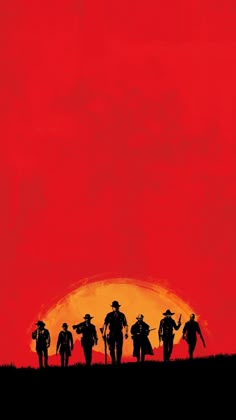
The West was not a place. It was a promise, and promises die. By the closing years of the nineteenth century, the vast, lawless frontier that had once defined America was shrinking under the weight of steel rails, telegraph wires, and the quiet, inexorable march of what men called civilization. The outlaws who had once been folk heroes—robbers who stole from the rich and gave to the poor, or at least told themselves they did—were becoming an inconvenience. The Pinkerton Detective Agency, a private army with a government’s blessing, hunted them with ledgers and rifles. The noose was no longer a symbol. It was a schedule.
This is the world of Red Dead Redemption, a saga that is not about winning. It is about the impossibility of outrunning your own past, and the terrible, beautiful cost of trying to become something other than what you were. The story spans two generations of outlaws bound together by a single, charismatic, and ultimately broken father figure. It is told across two main chapters—Red Dead Redemption 2 (set in 1899) and Red Dead Redemption (set in 1911)—with a legendary precursor, Red Dead Revolver, standing apart as a myth from an even earlier age. What follows is the complete history of that family, its fall, and the redemption that no one truly earns.
The Van der Linde Gang: A Family Built on a Lie
The story begins not with a hero, but with a patriarch. Dutch van der Linde was a man with a voice like honey and a philosophy like a knife. He believed in freedom—absolute, uncompromising freedom—and he believed that the laws of men were chains to be broken. In his younger years, he and his closest friend, Hosea Matthews, had robbed and conned their way across the West, and together they built something that looked, from the outside, like a family. They took in orphans and outcasts. They taught them to read, to shoot, and to believe that they were better than the civilization that had rejected them. Dutch called it a gang. Everyone inside it called it a home. (Red Dead Redemption 2)
The first of Dutch’s adopted sons was Arthur Morgan. Arthur was a boy when Dutch found him, angry and empty, and Dutch gave him a purpose. Arthur became the gang’s enforcer, the man who did the ugly work so that others did not have to. He was not a thinker. He was a hammer, and for most of his life he was content to be one. The second son was John Marston, a sullen, stubborn boy who arrived a few years later and never quite fit the mold. Dutch loved Arthur like a firstborn and John like a problem to be solved. That difference would shape everything. (Red Dead Redemption 2)
By 1899, the year Red Dead Redemption 2 begins, the gang is no longer a collection of Robin Hoods. It is a large, unwieldy family of killers, thieves, and broken people, and it is running out of places to hide. A ferry heist in the town of Blackwater has gone catastrophically wrong—a massacre, the newspapers call it—and the gang flees into the snowy mountains of Colter, hunted by the Pinkertons and by the rival O’Driscoll gang. The family that Dutch built is already cracking. The winter is cold. The food is scarce. And the promises Dutch keeps making—one more job, one more score, and then we disappear—are beginning to sound less like plans and more like prayers. (Red Dead Redemption 2)
Arthur Morgan: The Hammer That Learned to Feel
Arthur Morgan is not a good man in any simple sense. He has killed for money. He has beaten men for debts they could not pay. He has followed Dutch into every terrible idea the old man has ever had, because loyalty was the only religion he was ever taught. But Red Dead Redemption 2 is not the story of a man who is already redeemed. It is the story of a man who discovers, late and painfully, that he has a conscience, and that the conscience is not a comfort. It is a wound. (Red Dead Redemption 2)
The gang’s slow unraveling is the engine of that discovery. Every successful job is followed by a failure. Every new camp is followed by a raid. Dutch, once a visionary, becomes paranoid and cruel. He begins to see betrayal in every shadow, and the man who once preached that the family was everything starts to treat the family as expendable. The arrival of Micah Bell, a grinning, vicious killer who whispers in Dutch’s ear and feeds his worst instincts, accelerates the rot. Arthur watches it happen, and he does not know how to stop it, because stopping it would mean admitting that the father he loves is already gone. (Red Dead Redemption 2)
Arthur’s transformation is not a single moment. It is a series of small, quiet ones. He meets a widow named Charlotte Balfour and teaches her to survive, not because he has to, but because he can. He helps the Wapiti tribe, led by Rains Fall and his son Eagle Flies, even though it costs him and gains him nothing. He confronts the consequences of his own violence, and he begins to understand that the people he has hurt are not abstractions. And then he receives the diagnosis that changes everything: he is dying of tuberculosis, a disease he caught from a man he beat to collect a debt. The hammer has been given a deadline. (Red Dead Redemption 2)
From that moment, Arthur stops trying to save the gang. He starts trying to save the people inside it. He helps John Marston escape, again and again, even when John is too proud or too scared to accept it. He helps Abigail Roberts, John’s partner and the mother of his son, Jack, find a life beyond the gang’s orbit. He confronts Sadie Adler, a woman whose husband was murdered by the O’Driscolls and who has transformed her grief into a weapon, and he sees in her the same fury that once lived in him. And in the end, on a cliffside as the Pinkertons close in, Arthur makes his final choice. He does not choose revenge. He does not choose the money. He chooses to give John a chance to live a life that Arthur himself never had. He dies looking at the sunrise, a man who was not good, but who, in the last months of his life, became something close to it. (Red Dead Redemption 2)
Dutch’s Descent and the Betrayal of the Sons
The tragedy of Red Dead Redemption 2 is not Arthur’s death. It is Dutch’s life. Dutch van der Linde is the true architect of every sorrow in this saga, and the most painful thing about him is that he was not always a monster. He was a man who genuinely believed he was building a better world, and the slow collapse of that belief into paranoia, greed, and self-preservation is the series’ most devastating character arc. (Red Dead Redemption 2)
Dutch betrays Arthur. He leaves him to die at the hands of the army, and he does it not because Arthur has wronged him, but because Arthur has begun to question him. Dutch betrays John, too, leaving him for dead during a train heist and telling the gang that he could not be saved. And in the epilogue, when John finally tracks down Micah Bell to avenge Arthur, it is Dutch who appears from the shadows—a broken, haunted old man—and shoots Micah himself. He does not explain why. He does not apologize. He simply walks away, leaving John standing over the body of the man who poisoned his family. Dutch’s final act in Red Dead Redemption 2 is not redemption. It is the last spasm of a man who has spent years destroying everything he claimed to love and has finally, in one moment of clarity, chosen to destroy the instrument of that destruction rather than let it live. (Red Dead Redemption 2)
The epilogue of Red Dead Redemption 2 belongs to John Marston. He buys a plot of land called Beecher’s Hope, builds a house with his own hands, and tries to become a rancher. He marries Abigail. He raises Jack. For a few years, he is happy. It is the life Arthur died to give him, and it is the life that the world will not allow him to keep. (Red Dead Redemption 2)
John Marston and the Debt That Could Not Be Repaid
Red Dead Redemption begins in 1911, four years after the epilogue of its predecessor. John Marston is no longer an outlaw. He is a husband and a father, and he has spent years trying to bury the man he used to be. But the past does not stay buried. Edgar Ross, a senior agent of the Bureau of Investigation—the same organization that once employed the Pinkertons—arrives at Beecher’s Hope with a simple proposition. John will hunt down and kill or capture the remaining members of the Van der Linde gang. Bill Williamson, Javier Escuella, and Dutch van der Linde himself. If he refuses, Ross will take Abigail and Jack, and John will never see them again. (Red Dead Redemption)
John has no choice. He is not a hero. He is a man being blackmailed by a government that has decided to use him as a disposable tool. He travels to New Austin, where he is shot and left for dead by Bill Williamson’s men, and is rescued by Bonnie MacFarlane, a rancher with more courage than sense. He crosses into Nuevo Paraíso, a Mexico torn apart by revolution, and is forced to play both sides of a civil war—the corrupt military and the rebel forces of Abraham Reyes—in order to find Javier. He returns to West Elizabeth and finally tracks Dutch to a cliffside cabin, where the old man delivers one last speech about the impossibility of fighting the future, and then steps off the edge before John can pull the trigger. Dutch takes his own life, and in doing so, he spares John the burden of killing his former father. It is the last mercy Dutch has left to give. (Red Dead Redemption)
John returns to his family. He believes he is free. He is not. Edgar Ross has no intention of letting a former outlaw live a quiet life. The government does not want John Marston to be happy. It wants him to be a warning. In the final sequence of the game, Ross and a squad of soldiers and Bureau agents descend on Beecher’s Hope. John sends Abigail and Jack away, and he stands in the barn, rifle in hand, and fights until he cannot fight anymore. He is shot down in a hail of gunfire, and the last thing he sees is the life he tried to build burning around him. (Red Dead Redemption)
Jack Marston and the Cycle That Never Ends
The epilogue of Red Dead Redemption belongs to Jack Marston, John’s son. Years have passed. Abigail is dead. Jack is a young man, quiet and hard, carrying the weight of a father who was murdered by the same government that once employed him. He tracks Edgar Ross to a riverbank, where the old agent is hunting ducks and pretending to be retired. Jack challenges him to a duel. Ross, arrogant to the end, accepts. Jack kills him. The cycle of violence that began with Dutch van der Linde and passed through Arthur Morgan and John Marston has now claimed another generation. Jack does not ride off into the sunset. He stands over Ross’s body, and the screen fades to black, and the audience is left with the terrible certainty that the West is not dead. It has simply changed its clothes. (Red Dead Redemption)
Red Dead Revolver: The Legend Before the Fall
Before Arthur, before John, before Dutch, there was a simpler story. Red Dead Revolver, released in 2004, is the spiritual ancestor of the Redemption saga. It is set in the 1880s and follows Red Harlow, a bounty hunter whose parents were murdered by a corrupt general and a band of outlaws. Red’s story is a straightforward tale of revenge—gritty, stylish, and unburdened by the existential weight that would define its successors. It is not directly connected to the Van der Linde saga, but characters in Red Dead Redemption 2 occasionally reference Red Harlow as a legend, a story that outlaws tell each other around campfires. Revolver is the myth. Redemption is the reality. (Red Dead Revolver)
Understanding the Full Picture
The ultimate tragedy of Red Dead Redemption is not that the West died. It is that the men who tried to leave it behind could not. Dutch van der Linde built a family on a philosophy of freedom, and then destroyed it because he could not imagine a world in which he was not the one in charge. Arthur Morgan spent his entire life as a weapon, and only in the last months of his life did he learn that a weapon can choose what it is pointed at. John Marston tried to be a father, a husband, a rancher, and a good man, and the world killed him for it. Jack Marston, the last of the line, becomes the very thing his father died trying to escape: a killer with a gun and a grudge. (Red Dead Redemption 2, Red Dead Redemption)
What connects every chapter is the Van der Linde gang and the idea of redemption itself. Redemption is not a prize that can be won. It is a direction, a choice, a way of walking through the world that acknowledges the harm you have done and tries, however imperfectly, to do better. Arthur earns it. John almost earns it. Dutch never does. And Jack, the child who was supposed to inherit something better, inherits only the violence. The saga does not offer easy comfort. It offers truth: that some debts cannot be repaid, and some cycles cannot be broken, and the only thing a person can control is the choice they make in the moment before the end. (Red Dead Redemption 2, Red Dead Redemption)
For a newcomer seeking a path into this saga, the most powerful experience is to follow the story in the order it was told, not the order in which it happened. Begin with Red Dead Redemption 2, the prequel, and let Arthur Morgan’s slow, painful awakening carry you into the world. Then move to Red Dead Redemption, the original, and watch John Marston try to build a life on the wreckage of everything Arthur sacrificed. The epilogue of the second game leads directly into the first, and the emotional weight of that transition is the saga’s greatest achievement. Red Dead Revolver can be experienced at any time—it is a legend, not a chapter—but it is best understood as a glimpse of the older, simpler West that the later games are already mourning. The order matters less than the willingness to sit with the sadness. Red Dead Redemption is not a story about winning. It is a story about what it costs to try.