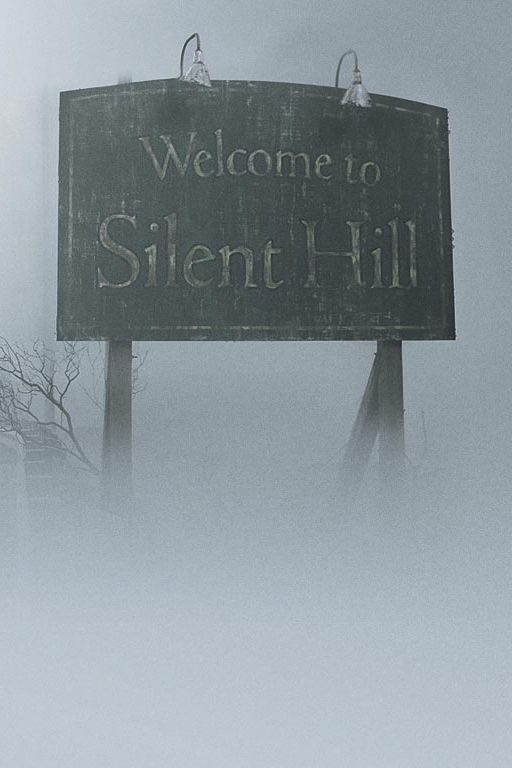
The town of Silent Hill does not appear on most maps. It sits on the shore of Toluca Lake, a quiet resort community in the American Northeast, the kind of place where families once took summer vacations and the local diner still serves pie. But the land beneath the town has been wrong for a very long time. Long before European settlers arrived, Native American tribes—the Toluca among them—treated the region as sacred ground, a place where the barrier between the living and the dead was dangerously thin[reference:0]. When settlers came in the seventeenth century, they did not honor that boundary. They displaced and massacred the indigenous population, and the violence soaked into the soil like rain into a grave[reference:1]. What grew from that soil was a town, and what grew beneath the town was something else entirely: a presence, ancient and hungry, that learned to reflect the darkness in the human heart back at whoever came looking for it.
This is the complete history of Silent Hill—not a single story, but a place that tells a different story to everyone who enters it. The games are not a continuous saga in the traditional sense. They are a collection of nightmares that share a geography, a mythology, and a single, terrible truth: that the town is a mirror, and the monsters are always, always us.
The Order and the God That Never Was
The human architects of Silent Hill's misery were not scientists or soldiers. They were believers. In the decades after the town's founding, a religious movement took root there, blending the spiritual traditions of the displaced native tribes with a rigid, apocalyptic dogma of its own. They called themselves The Order, and they worshipped a deity they simply called God—a being they believed had attempted to create paradise at the dawn of time but had run out of power before the work was finished[reference:2]. The Order taught that this God could be resurrected, and that its resurrection would cleanse the world of sin and usher in an age of paradise. What they did not say aloud was that this paradise would arrive only after the destruction of nearly everything else.
The Order was not a single church but a network of smaller cults, each worshipping a different aspect of the same deity and each practicing its own version of the same atrocities. They conducted ritual human sacrifices, trafficked in a hallucinogenic drug called White Claudia to fund their operations, and ran a facility disguised as a charity orphanage—the Wish House, or Hope House—where children were confined and indoctrinated into the faith[reference:3][reference:4]. The Order's members were not cartoon villains. They were ordinary people who believed, with absolute conviction, that the suffering they caused was a necessary step toward a better world. Their faith was a machine that turned children into vessels and grief into fuel, and it would produce the single most important figure in the entire history of the town.
Alessa Gillespie and the Birth of the Otherworld
Alessa Gillespie was born into The Order. Her mother, Dahlia Gillespie, was a priestess of the cult, and from the moment Alessa could understand language, she was taught that her life belonged to God[reference:5]. Alessa possessed something rare: a natural sensitivity to the supernatural, a gift that made the town's hidden energies bend toward her. Dahlia saw that gift and did not see a daughter. She saw a vessel. When Alessa was seven years old, Dahlia and the Order subjected her to a ritual designed to impregnate her with the cult's deity, forcing the God to be born through her body[reference:6][reference:7]. The ritual went catastrophically wrong. A fire broke out—whether caused by a malfunctioning boiler, by the Order's negligence, or by Alessa herself, desperate to escape, is a question the story never fully answers—and Alessa was burned beyond recognition, her body left a ruin of scar tissue and agony[reference:8].
But Alessa did not die. Something inside her—the God-fetus the ritual had planted, or her own furious will, or both—refused to let her go. She lingered in a coma, kept alive in the basement of Alchemilla Hospital, her wounds never healing, her mind reaching out into the town like roots into soil[reference:9]. And in that half-death, Alessa discovered something terrible: she could reshape reality. Her nightmares, her fears, her memories of abuse and loneliness, began to bleed out of her sleeping mind and into the streets of Silent Hill. The town became a stage for her suffering. The Otherworld—a decaying, rusted, blood-soaked version of Silent Hill—was born from a child's unending nightmare[reference:10].
To stop the God from being born, Alessa split her own soul in two. One half remained in her burned body, tethered to the hospital and the Otherworld. The other half was reborn as a baby, found on the side of the road by a man named Harry Mason and his wife, and raised as their daughter, Cheryl[reference:11][reference:12]. For seven years, the two halves lived separate lives: one in endless pain, the other in ordinary love. And then Harry and Cheryl drove into Silent Hill on what was supposed to be a vacation, and the two halves began to pull toward each other.
Harry Mason and the First Nightmare
Silent Hill (the first game, released in 1999) is the story of Harry Mason, a widowed writer who crashes his car on the outskirts of town after swerving to avoid a figure in the road. He wakes to find Cheryl gone and the town swallowed by an impossibly thick fog. The streets are empty. The cars are abandoned. And then he sees the first monster: a hunched, skinless thing that drags itself toward him with a knife. Harry is not a soldier or a chosen one. He is a father looking for his daughter, and that is the only thing that keeps him moving through a town that wants him dead[reference:13].
Harry's search leads him into the heart of The Order's history. He meets Dahlia Gillespie, who presents herself as a concerned mother and asks for his help completing a ritual to stop the darkness. He meets Cybil Bennett, a police officer who has stumbled into the same nightmare. And he meets Lisa Garland, a nurse at Alchemilla Hospital who has been caring for Alessa and who is slowly realizing that she is already dead, a ghost bound to the hospital by the same power that keeps Alessa alive[reference:14]. Harry learns that Cheryl is Alessa's other half, and that Dahlia intends to reunite them—not to heal her daughter, but to complete the ritual and birth the God. The Seal of Metatron, which Dahlia claims is a mark of destruction, is in truth a protective sigil that Alessa has been using to hold the God back[reference:15]. Dahlia has been lying to everyone, including Harry, from the beginning.
The climax of the first game is a confrontation not with a monster but with a choice. Alessa, reunited with her other half, is consumed by the God-fetus and transforms into a massive, pulsating entity of raw nightmare. Harry destroys it—not because he is powerful, but because he refuses to stop fighting for the girl he raised as his daughter. In the good endings, Alessa, dying at last, gives Harry a baby: the reincarnation of her soul, freed from the darkness, to be raised as Heather Mason[reference:16][reference:17]. Harry escapes Silent Hill with the child. For a time, there is peace. It will not last.
James Sunderland and the Prison of Guilt
The second game, Silent Hill 2, is the story that defined the series and remains the most intimate and devastating chapter. It is not about The Order. It is not about the God or the cult or the fate of the world. It is about a man who received a letter from his dead wife.
James Sunderland arrives in Silent Hill carrying a letter from Mary, his wife, who died of a wasting illness three years earlier. The letter asks him to meet her at their special place, the hotel by the lake where they once stayed. James is quiet, ordinary, and clearly grieving. But the town knows what he does not: that the letter is blank, that Mary's body is in the trunk of his car, and that James killed her[reference:18]. He has come to Silent Hill not to find his wife but to be punished for what he did to her.
The Otherworld that James experiences is not Alessa's nightmare. It is his own. The monsters he encounters are not random horrors; they are pieces of his psyche given flesh. The Lying Figures, twisted and bound in their own skin, embody his disgust at Mary's illness. The Mannequins, fused and helpless, reflect his guilt over his sexual frustration during her long decline. And then there is Pyramid Head, a towering executioner with a rusted greatsword and a metal pyramid for a head, a creature so iconic that it became the face of the entire franchise. Pyramid Head is not a villain in any ordinary sense. He is James's guilt made manifest, an executioner who exists to punish him, to kill the delusion of Maria—a woman who looks exactly like Mary but behaves like the wife James secretly wished he had—and to force him to remember the truth[reference:19][reference:20]. Maria dies again and again, each death a repetition of the murder James committed, until James finally accepts what he has done, confronts his own executioner, and chooses whether to live with the truth or die inside it[reference:21]. Silent Hill does not judge James. It simply refuses to let him lie to himself any longer.
Heather Mason and the Rebirth of God
Seventeen years after the events of the first game, Silent Hill 3 follows Heather Mason, the reincarnation of Alessa and Cheryl, now a teenage girl living with her father, Harry. Harry has spent years hiding Heather from The Order, moving from town to town, never telling her the truth about who she really is. When a private detective named Douglas Cartland is hired to find her, The Order moves in. Heather comes home to find Harry murdered, his body laid out in a chair, and something inside her—the dormant God, the part of Alessa that never died—begins to stir.
Heather's journey is not a search for a missing person. It is a flight from a destiny she never agreed to accept. She is pursued by Claudia Wolf, a priestess of The Order who believes that Heather's suffering will complete the ritual that Dahlia began decades earlier[reference:22]. Claudia does not see herself as a villain. She believes that the birth of God will bring paradise, that the agony of one girl is a small price to pay for the salvation of the world. Heather fights her way through the same fog-choked streets and rusted Otherworlds that Harry once navigated, but she does so with a different kind of strength: the fury of a daughter who has lost her father and refuses to let his sacrifice be meaningless. The game ends, in its true ending, with Heather choosing to live, to reject the God inside her, and to walk away from Silent Hill with her own life, her own name, and her own future.
Walter Sullivan and the Room That Would Not Open
Silent Hill 4: The Room is the strange, experimental chapter of the original saga, and it is also the one most directly connected to The Order's long shadow. Henry Townshend is a quiet young man who wakes one morning to find that his apartment door has been sealed from the inside with chains and padlocks. He cannot leave. His phone does not work. The windows will not open. And then a hole appears in his bathroom wall, a tunnel into a nightmare[reference:23].
The architect of Henry's imprisonment is Walter Sullivan, a killer who was raised in The Order's Hope House orphanage and who believes that his apartment—Room 302—is his mother[reference:24]. Walter is trying to complete a ritual called the 21 Sacraments, a sequence of murders that he believes will resurrect his "mother" and grant him peace. Each victim is a piece of the ritual, and Henry, trapped in Room 302, is meant to be the final offering. Walter is not a cultist in the traditional sense. He is a product of the cult, a child who was never loved, never held, never told that he was a person. His murders are not acts of devotion. They are the desperate, violent attempts of a broken boy to build a family out of corpses. The game's most haunting element is its slow revelation that the apartment itself—the one place Henry thought was safe—has been the center of Walter's ritual all along. The Otherworld does not always announce itself with fog and monsters. Sometimes it moves into your home and waits for you to notice.
The Later Chapters: Homecoming, Downpour, and the Fracturing of the Myth
After the original four games, the franchise passed through different hands and the mythology began to fragment. Silent Hill: Origins returned to the town's past to tell the story of a truck driver named Travis Grady, who discovers that his own childhood is tangled with Alessa's and The Order's experiments. Silent Hill: Homecoming followed Alex Shepherd, a soldier returning from war to find his brother missing and his hometown in the grip of a new cult, one that has adapted The Order's beliefs into a system of ritual sacrifice designed to appease the town's power. Silent Hill: Downpour told the story of Murphy Pendleton, a convict who escapes a prison transport and finds himself in Silent Hill, where the town forces him to confront the violence of his own past.
These later games are uneven, but they share a common thread: the town is not a place where stories end. It is a place where they are repeated. Every protagonist who enters Silent Hill carries something they cannot face—guilt, grief, rage, a crime they have buried so deep they no longer remember committing it—and the town gives that thing a body. The monsters change. The geography shifts. But the question is always the same: what are you hiding from yourself?
Understanding the Full Picture
The ultimate tragedy of Silent Hill is that the town does not create evil. It reveals it. The Order did not invent human cruelty; they simply built a theology around it, a system that allowed them to call their sacrifices holy. Alessa did not create the darkness; she was a child who had been hurt so badly that her pain became a physical place, and that place became a prison for everyone who came after her. James did not become a monster in Silent Hill; he brought a monster with him, and the town simply gave it a shape. The fog, the rust, the blood, the creatures—they are not punishments imposed from outside. They are diagnoses.
What connects every chapter is not a single villain or a single artifact but a single idea: that the worst thing a person can do is refuse to see themselves clearly. The town offers that clarity whether you want it or not. Harry Mason survives because he loves his daughter more than he fears the truth. James Sunderland can only escape by admitting what he did. Heather Mason can only live by rejecting the destiny that was forced on her. Walter Sullivan destroys himself because he cannot accept that his mother never existed. The town is a mirror, and the only way out is through it.
For a newcomer seeking a path into this franchise, the clearest entry is to follow the thread of the town's original sin. Begin with Silent Hill (1999) to understand Alessa and The Order, then move directly to Silent Hill 3 to see the consequences of that story play out in Heather's life. From there, step sideways into Silent Hill 2, which is largely standalone but is the emotional and artistic heart of the series. Silent Hill 4: The Room completes the original arc by showing how The Order's poison spread beyond the town's borders. The later games—Origins, Homecoming, and Downpour—are variations on the same theme, expansions of the mythology rather than essential chapters. And Silent Hill: Shattered Memories, a reimagining of the first game, exists in its own separate reality, a dream within a dream[reference:25].
The order matters less than the willingness to look. Silent Hill does not ask you to be brave. It asks you to be honest. And for anyone who has ever carried something they could not name, that is the most terrifying thing of all.